Quick answer
The bamboo circus Hoi An story follows a symbolic journey through Vietnamese rural life, seasons, and human connection. The narrative arc moves from dawn labor in rice fields through communal celebration, hardship, resilience, and renewal. Performers embody archetypal figures—farmers, water carriers, children—using bamboo as both metaphor and physical instrument. No spoken dialogue appears; instead, acrobatics, traditional music, and visual storytelling convey emotion and meaning across approximately 60 minutes of performance.
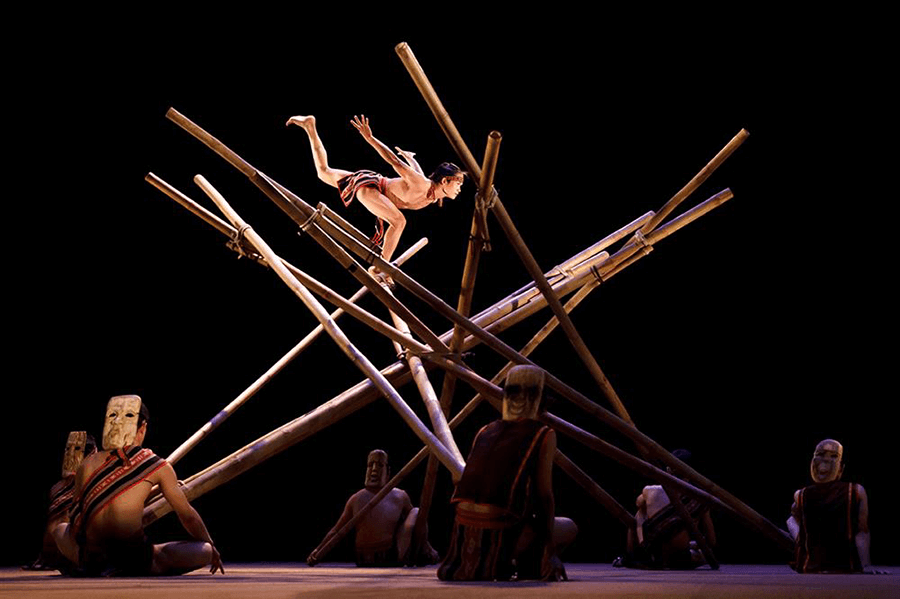
The bamboo poles stacked behind the Nguyen Phuc Chu Street theater hold more than structural function—they anchor the entire symbolic framework of Lune Production's narrative. Each segment of the performance corresponds to a phase in Vietnam's agricultural calendar, translated into movement vocabulary that requires no translation. The bamboo circus Hoi An story opens with dawn rituals: performers balance atop swaying poles representing rice stalks, their bodies tracing the repetitive motions of planting and harvest. This agricultural foundation establishes the show's central metaphor—bamboo as both literal material of Vietnamese village life and symbol of flexibility under pressure. The opening sequence introduces character archetypes through physicality rather than exposition: the elder who steadies the young, the child who tests boundaries, the collective that moves as one organism. Audience members unfamiliar with Vietnamese cultural context still grasp the universal dynamics at play. The middle sections explore tension and interdependence. A water-carrying sequence built around hand-to-hand acrobatics demonstrates how survival in monsoon climates requires trust and timing. Performers pass ceramic vessels overhead while balancing on narrow beams, a literal representation of resource management in flood-prone regions. When a vessel shatters mid-routine—an intentional narrative beat—the ensemble regroups without pause, modeling the resilience embedded in rural Vietnamese communities facing typhoons and crop failure. This moment consistently draws audible reactions from visitors at 1A Nguyen Phuc Chu Street, where the intimate 400-seat venue allows no distance between performer risk and audience response. The final third shifts toward celebration and cyclical renewal. Bamboo instruments—percussion tubes, stringed monochords—enter the soundscape as performers construct geometric structures in real time. These formations reference traditional village architecture: communal houses, festival gates, wedding canopies. The construction becomes a dance, the dance becomes a story about building and rebuilding. Younger cast members mirror the movements of elder performers, suggesting generational knowledge transfer without didactic staging. The narrative concludes not with resolution but with return—figures assume the opening dawn postures, bamboo poles reset, the cycle prepared to begin again. This circular structure reflects Vietnamese cosmology and agricultural reality alike. Visitors arriving at the Hoi An Ancient Town venue often ask whether the show follows a single protagonist or linear plot. Neither framework applies. Instead, the performance operates as episodic vignettes unified by material culture and movement language. The absence of program notes or projected translations is deliberate—Lune Production's artistic director designed the work to communicate through physical metaphor rather than explanatory text. First-time circus audiences and seasoned theater-goers report equal comprehension, though each extracts different layers of meaning. The story being told is both specific to Quang Nam Province's heritage and accessible to anyone who has witnessed community, labor, or seasonal change.
“The narrative concludes not with resolution but with return—figures assume the opening dawn postures, bamboo poles reset, the cycle prepared to begin again.”
Cultural Origins Behind the Bamboo Circus Hoi An Story
The bamboo circus hoi an story emerges from centuries of Vietnamese agrarian tradition, where bamboo served as both livelihood and cultural symbol across rural communities. Farmers harvested the material for construction, fishing tools, and ceremonial objects. Villages in central Vietnam developed acrobatic folk practices during harvest festivals, balancing on bamboo poles to entertain crowds between planting seasons. These performances combined physical skill with spiritual ritual, honoring ancestors and land spirits through movement. French colonial authorities documented traveling troupes in Quang Nam province during the 1920s, noting their use of bamboo scaffolding for aerial displays. After reunification in 1975, state cultural programs preserved regional circus arts while encouraging modern choreography. The Hoi An region maintained its bamboo craft guilds even as tourism reshaped the ancient town's economy. Local artisans supplied materials to performance groups seeking authentic staging elements rooted in heritage rather than imported aesthetics. Lune Production founded the dedicated performance space at 1A Nguyen Phuc Chu Street in 2018, commissioning a circular bamboo theater inspired by traditional communal houses. The company collaborated with Quang Nam craftsmen to construct the venue's structural framework entirely from locally sourced bamboo, reviving construction techniques last employed in mid-century village halls. Choreographers researched archival footage of folk acrobatics from the Mekong Delta and central highlands, integrating documented movements into contemporary circus vocabulary. The narrative developed over two years of workshops with performers trained in both Western circus disciplines and Vietnamese water puppetry traditions. Visitors entering the Lune Center today encounter the same curved bamboo lattice that frames the original 2018 structure. The material's organic texture remains central to the production's visual identity, connecting audiences to the agricultural landscapes that shaped the performance vocabulary they witness on stage.
Agrarian communities in central Vietnam developed bamboo pole acrobatics during harvest festivals, combining entertainment with spiritual ceremony.
French colonial records documented traveling circus troupes in Quang Nam province using bamboo scaffolding for aerial performances.
Post-reunification cultural programs preserved regional circus traditions while encouraging modern choreographic experimentation.
Lune Production researched folk acrobatic archives and collaborated with Quang Nam craftsmen to design a bamboo theater inspired by communal village architecture.
The Lune Center opened at 1A Nguyen Phuc Chu Street with a performance space constructed entirely from locally sourced bamboo.
The production integrated Vietnamese water puppetry techniques and Mekong Delta folk movements into contemporary circus disciplines, establishing its narrative framework.
Narrative Themes Within the Bamboo Circus Hoi An Story
The performance narrative unfolds through physical theater, depicting the transition from rural village life to the complexities of modern urbanization. It utilizes bamboo apparatus to explore themes of communal labor, natural cycles, and the preservation of cultural identity.
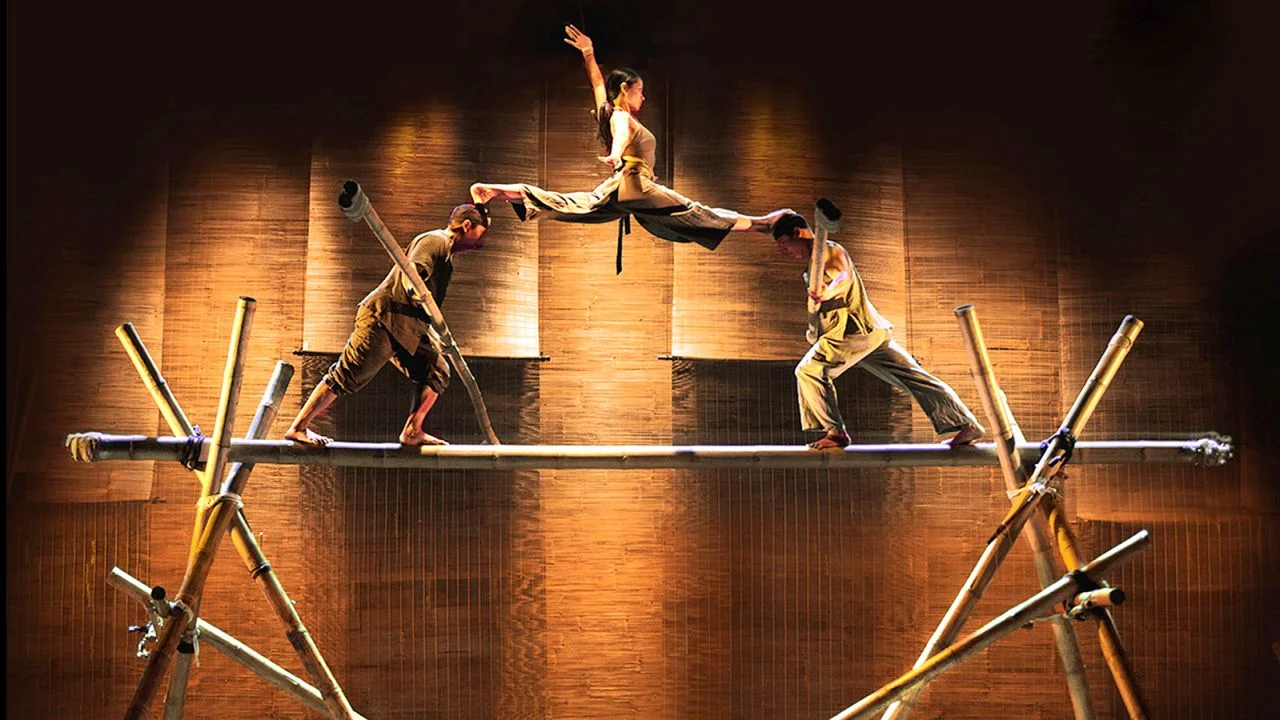
Village Beginnings
The performance opens with sequences illustrating daily life, highlighting traditional agricultural practices and communal cooperation. Artists use bamboo props to simulate tools and structural elements of rural homes.
Watch for the synchronization of performers mimicking rhythmic field work.
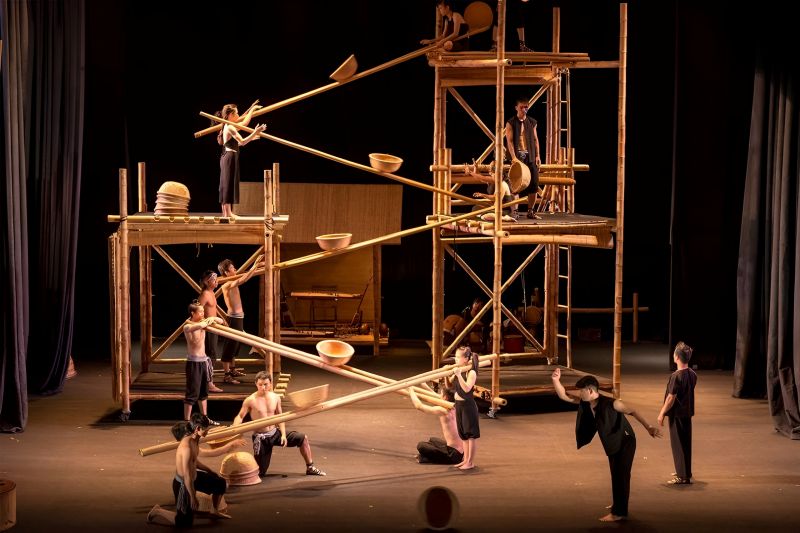
Bamboo River Life
Performers use fluid acrobatics to depict the significance of water and river systems in Vietnamese life. The bamboo structures transition into shapes representing boats and aquatic environments.
Observe how bamboo poles manipulate the stage to create river currents.
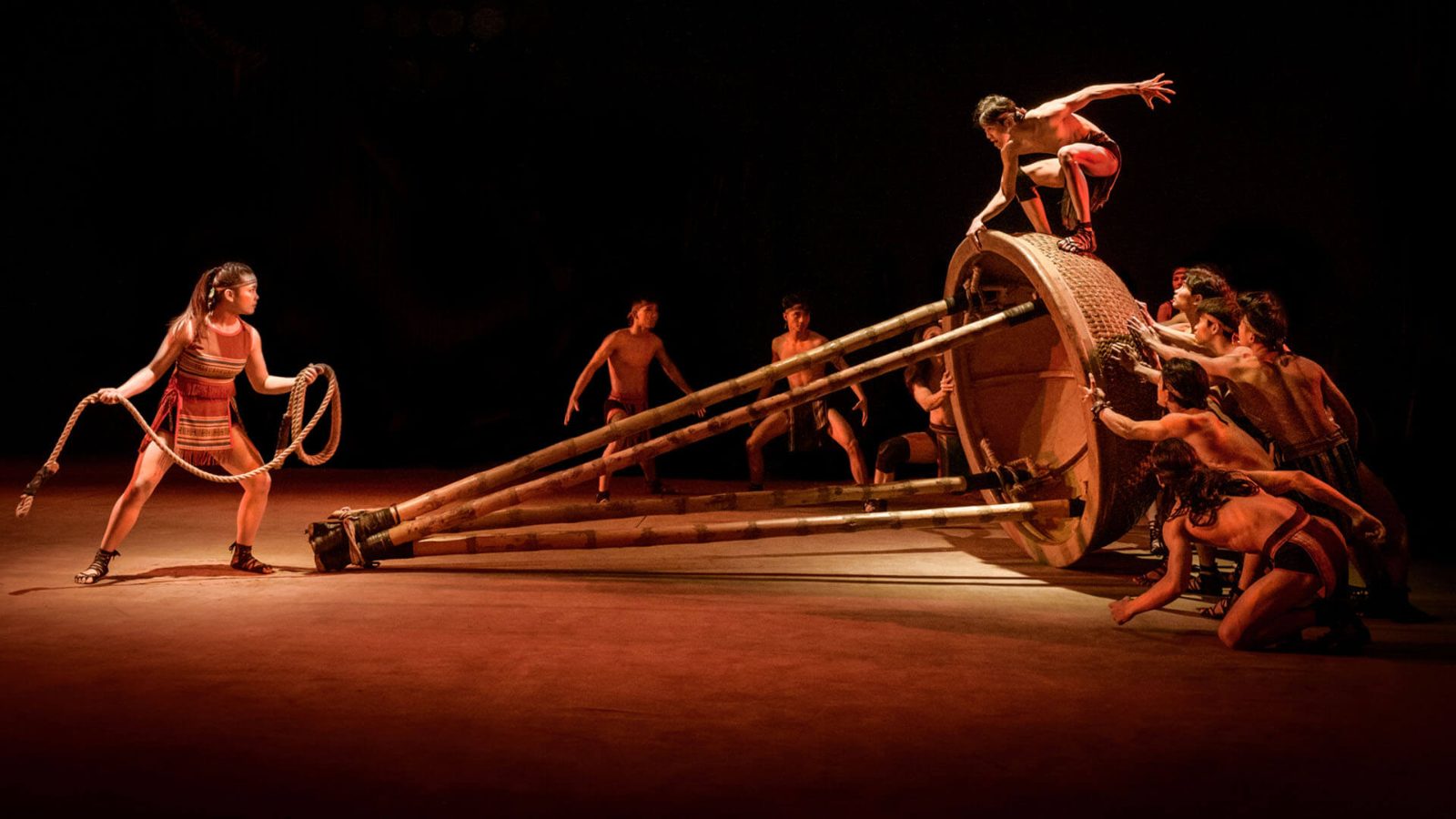
Urban Transition
This segment portrays the migration from countryside to city, characterized by increased pace and structural complexity. The choreography shifts to represent crowded spaces and the challenges of a developing landscape.
Focus on the architectural formations created by the performers using bamboo.
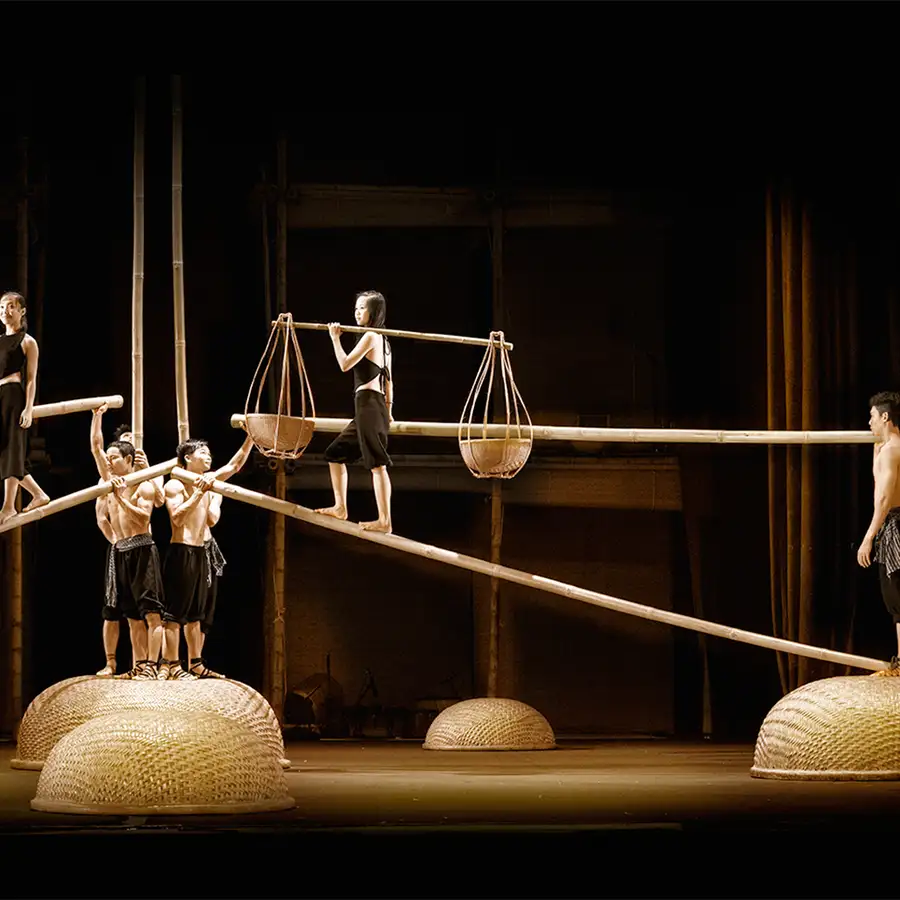
Communal Harmony
The final sequence emphasizes unity and the resilience of tradition amidst change. The ensemble constructs a large, integrated bamboo installation that reflects collective strength.
View from the center for the full structural geometry.
Performance Times for the Bamboo Circus Hoi An Story
The Bamboo Circus Hoi An Story is performed weekly at the Hoi An Lune Center, with shows held Tuesday through Sunday. The venue remains closed on Mondays.
| Monday | Closed | |
|---|---|---|
| Tuesday | 18:00–19:00 | |
| Wednesday | 18:00–19:00 | |
| Thursday | 18:00–19:00 | |
| Friday | 18:00–19:00 | |
| Saturday | 18:00–19:00 | |
| Sunday | 18:00–19:00 |
Check availability
Frequently Asked Questions: Bamboo Circus Hoi An Story
Everything you need to know about bamboo circus hoi an story